Identifying and Solving Aquaponics Plant Deficiencies

There’s nothing more rewarding than watching lush, green herbs and vegetables sprout from your aquaponics garden. It’s a vibrant, living ecosystem right on your desktop or in your classroom. But what happens when those vibrant green leaves start to turn a concerning shade of yellow, or growth seems to stall? Don’t panic! Your plants are simply communicating with you. They’re giving you clues about the health of the entire system.
Think of your aquaponics setup not as a fish tank with plants on top, but as a single, symbiotic organism. The fish, plants, and beneficial bacteria are all working in harmony. A deficiency in your plants is often the first, most visible sign that the system’s balance needs a gentle nudge. This guide will turn you into a plant detective, helping you spot the signs and solve the most common nutrient deficiencies with confidence.
Mobile vs. Immobile Nutrients: The First Clue
Before we dive into specific problems, here’s the most important detective trick to learn: where on the plant is the problem appearing? This single clue can cut your diagnostic time in half.
- Mobile Nutrients (Nitrogen, Phosphorus, Potassium): Plants are smart. If they're running low on a mobile nutrient, they can pull it from their older, lower leaves and send it to the new, more important growth at the top. Therefore, deficiencies in mobile nutrients show up on older, lower leaves first.
- Immobile Nutrients (Iron, Calcium, Manganese): These nutrients, once delivered to a leaf, are locked in place. The plant can’t move them around. So, if there’s a shortage, the new, upper leaves and growing tips will be the first to suffer.
Remembering this simple rule is your secret weapon. Now, let’s look at the culprits.
Your Visual Field Guide to Common Deficiencies
While there are over a dozen essential nutrients, most well-managed aquaponics systems only run into a few common issues. Here are the "usual suspects" to look out for.
1. Iron (Fe) Deficiency - The Classic Aquaponics Issue
- The Sign (Immobile): Look for interveinal chlorosis—that’s a fancy term for yellowing leaves where the veins remain a distinct, dark green. This will appear on the newest, youngest leaves at the top of the plant.
- The Cause: This is almost always a pH problem. When your water’s pH climbs above 7.0, iron becomes “locked out” and unavailable for plants to absorb, even if it’s plentiful in the water.
- The Solution: The primary fix is to manage your pH, aiming for a slightly acidic range of 6.0 - 7.0. You can gradually lower your pH with an aquaponics-safe pH down solution. For a quick fix while you adjust your pH, you can supplement with chelated iron, which is readily available to plants even at higher pH levels.
2. Nitrogen (N) Deficiency - The New System Blues
- The Sign (Mobile): You'll see a general, uniform yellowing of the entire leaf, starting with the oldest, lowest leaves on the plant. This is often accompanied by slow, stunted growth.
- The Cause: This is very common in brand-new systems that haven’t fully “cycled.” The beneficial bacteria colony isn't large enough yet to convert all the fish waste (ammonia) into plant-available nitrates. It can also happen in a mature system with too few fish or if you aren't feeding them enough.
- The Solution: Patience is key for a new system. Give your bacteria time to multiply. For a mature system, ensure your fish are fed a high-quality diet and that your stocking density is appropriate for your plant load.
3. Potassium (K) Deficiency - The Burnt Edges
- The Sign (Mobile): Watch for yellowing or browning that starts at the tips and outer edges of the older, lower leaves. The leaves might look like their margins have been burnt. You may also notice weak or spindly stems.
- The Cause: Most fish food is lower in potassium than what heavy-fruiting plants (like tomatoes or peppers) require. Leafy greens are less likely to show this deficiency.
- The Solution: Supplementing with an aquaponics-safe source of potassium is the best bet. Liquid kelp meal or potassium sulfate are excellent, fish-safe options to add this vital nutrient back into your system.
Is It Really a Deficiency? Common Look-Alikes
Before you start adding supplements, make sure the problem isn’t environmental. Sometimes, the symptoms of a nutrient deficiency can be mimicked by other issues.
- Lighting: Are your plants looking pale and getting “leggy” or stretched out? They might just need more light. Insufficient light can cause a general paleness that looks like a nitrogen deficiency. For robust indoor growth, an AquaSprouts LED Grow Light provides the full spectrum that plants crave.
- Pests: Tiny pests like spider mites or aphids can cause stippling, yellow spots, and curled leaves. Always check the underside of leaves for any unwanted guests.
Creating a Balanced Ecosystem from the Start
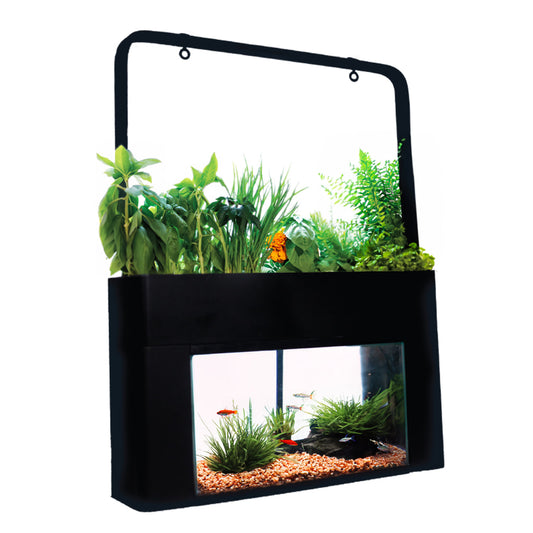
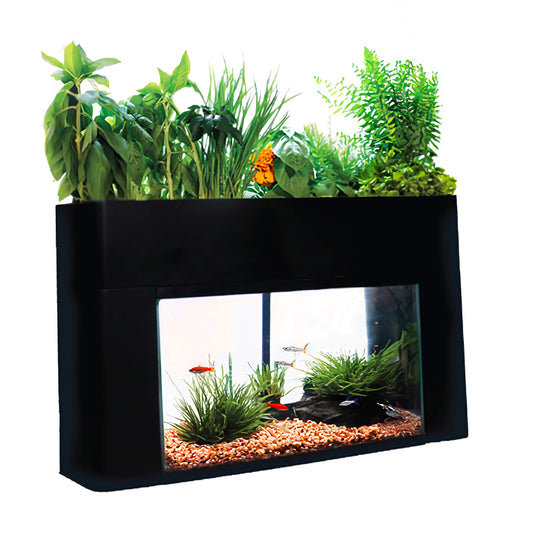
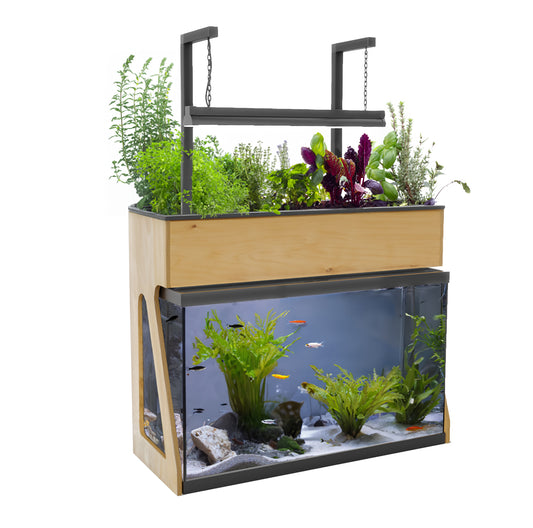
The best way to solve plant deficiencies is to prevent them. A well-designed, stable system provides the foundation for a healthy ecosystem where nutrients are naturally balanced. An all-in-one kit like the AquaSprouts Garden is engineered to create this balance from day one, turning your standard 10-gallon aquarium into a productive, self-sustaining garden.
The system's success relies on every component, right down to the grow bed. Using a high-quality, pH-neutral Grow Media provides excellent support for roots, ensures proper water flow, and offers a massive surface area for beneficial bacteria to colonize.
By learning to read your plants, you’re not just gardening; you’re becoming an ecosystem manager. Each yellow leaf is a lesson, guiding you toward a more resilient and beautiful aquaponics garden. Don't be discouraged—be curious! For more tips and tricks on your journey, be sure to explore the AquaSprouts Blog.
Frequently Asked Questions
What is the most common nutrient deficiency in aquaponics?
Iron deficiency is one of the most common issues, especially in systems with a pH above 7.0. High pH 'locks up' iron, making it unavailable for plants to absorb, even if it's present in the water. This results in yellowing new leaves with green veins (interveinal chlorosis).
Can I use regular garden fertilizer in my aquaponics system?
No, you should never use conventional garden fertilizers in an aquaponics system. Most are synthetic and contain chemicals that are toxic to fish and harmful to the beneficial bacteria that drive the nitrogen cycle. Only use supplements specifically labeled as 'aquaponics-safe'.
How often should I test my aquaponics water parameters?
For a new system, it's wise to test pH, ammonia, nitrites, and nitrates weekly as it cycles. Once your system is mature and stable (usually after 1-2 months), you can typically reduce testing to every 2 weeks. Consistent monitoring is key to catching problems before they affect your plants and fish.
Why are my new seedlings turning yellow?
Yellowing seedlings can be caused by a few things. It could be insufficient light, a common issue for indoor setups. It might also be a sign that your system is still new and hasn't built up a sufficient level of nitrates to feed the plants yet. Finally, check that your grow media isn't waterlogged, as this can starve the roots of oxygen.