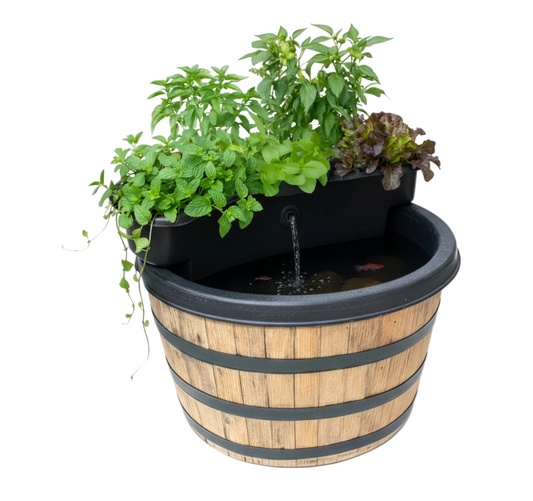
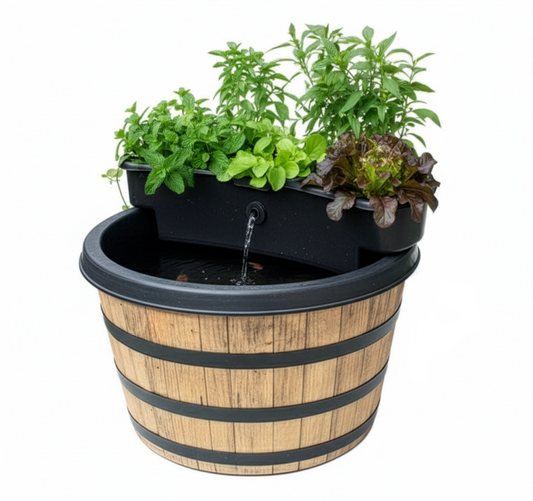
The Unspoken Reason Aquaponics Isn't Mainstream: It's Too Sustainable for Big Ag's Bottom Line

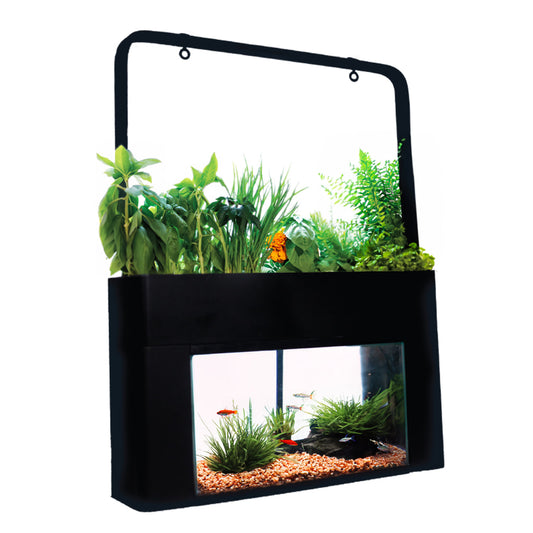
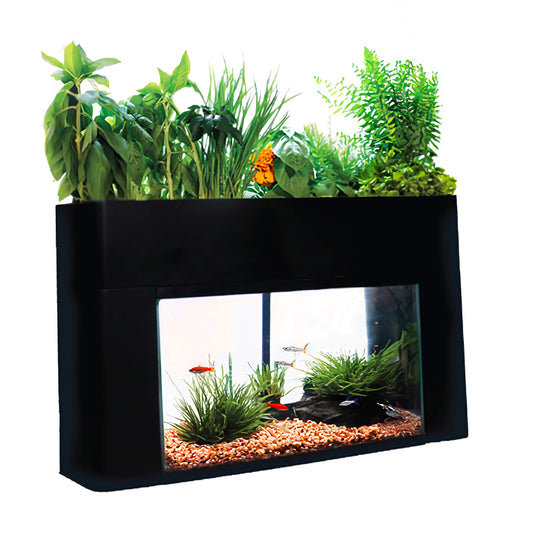
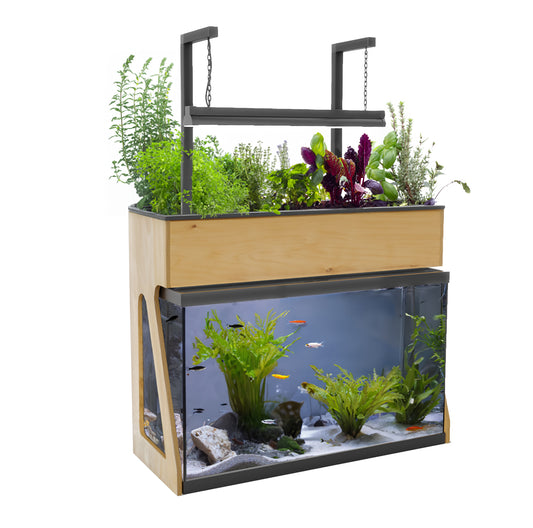
Imagine a world where a vibrant garden thrives on your kitchen counter, producing fresh herbs and leafy greens year-round. Below it, in a small aquarium, colorful fish swim peacefully. There are no pesticides, no chemical fertilizers, and it uses 90% less water than a traditional garden. This isn't science fiction; it's aquaponics. It’s a beautifully simple, closed-loop ecosystem that mimics the most efficient systems in nature.
So, the question is unavoidable: if this technology is so elegant, so efficient, and so incredibly sustainable, why isn't it everywhere? Why aren't we seeing aquaponics systems in every home, school, and community center? Why isn't it being hailed as the future of food?
The answer, we believe, has little to do with technology or feasibility. It has everything to do with economics. The simple, unspoken truth is that aquaponics is fundamentally disruptive to the business model of modern industrial agriculture. In short, it’s just too sustainable for Big Ag’s bottom line.
What Exactly is Aquaponics? A Quick Refresher on Nature's Perfect System
Before we dive into the economics, let's marvel at the science. Aquaponics is a symbiotic marriage of two practices: aquaculture (raising fish) and hydroponics (growing plants in water without soil).
Here’s how it works in three simple steps:
- Fish Do Their Part: Fish in the tank produce waste, which is rich in ammonia. In a regular aquarium, this ammonia builds up and becomes toxic.
- Beneficial Bacteria Work Their Magic: A pump cycles this ammonia-rich water up to the plant grow bed. Naturally occurring beneficial bacteria in the grow media convert the toxic ammonia first into nitrites, and then into nitrates.
- Plants Get Fed: Nitrates are a perfect, readily available superfood for plants! The plant roots absorb these nitrates, taking up the nutrients they need to grow lush and healthy. In the process, they filter and clean the water.
The freshly cleaned water is then returned to the fish tank, and the cycle begins again. It's a self-sustaining, living machine. This process yields incredible benefits that stand in stark contrast to traditional farming.
The Unbeatable Benefits of an Aquaponic Ecosystem:
- Incredible Water Conservation: By continuously recycling water, aquaponics systems use up to 90% less water than conventional soil-based agriculture. In a world facing increasing water scarcity, this is revolutionary.
- No Soil, No Problem: Aquaponics can be set up anywhere, from a high-rise apartment in a bustling city to a classroom in the suburbs. It eliminates the need for arable land.
- Inherently Organic: You cannot use chemical pesticides, herbicides, or synthetic fertilizers in an aquaponics system. Why? Because anything you add to the plants will harm the fish. The system forces a natural, organic approach to cultivation.
- Faster Growth & Higher Yields: Plants have constant access to nutrient-rich water, allowing them to grow faster and more densely than in soil.
It sounds perfect, right? A system that produces food with minimal waste, minimal water, and no chemicals. To understand why it remains a niche interest, we need to look at the industry it threatens to disrupt.
The Big Ag Business Model: A System Built on Dependency
Industrial agriculture, often called "Big Ag," is a marvel of modern production. It feeds billions of people. But it's also a business, and its model is based on selling massive quantities of consumable, single-use products. The entire system is designed to create a cycle of dependency for farmers and, by extension, consumers.
Think of it like the printer and ink cartridge business model. The printer (the land, the tractor) is a one-time purchase, but the real, recurring profit comes from selling the ink (the seeds, fertilizers, and pesticides) season after season, year after year.
The Pillars of Big Ag's Profit:
1. Synthetic Fertilizers
The Green Revolution of the mid-20th century was powered by synthetic nitrogen fertilizers, which dramatically increased crop yields. Today, the global synthetic fertilizer market is worth hundreds of billions of dollars. This industry relies on farmers needing to constantly replenish nutrients in depleted soil. They sell a solution to a problem that their own monoculture farming practices often exacerbate.
2. Pesticides and Herbicides
Planting endless acres of a single crop (monoculture) is an open invitation for pests and weeds. This creates a massive, multi-billion dollar market for chemical pesticides and herbicides. It’s another consumable product sold to manage the inherent imbalances of the industrial farming system.
3. Patented Seeds
Many large agricultural companies are also seed companies. They develop and patent genetically modified seeds, some of which are engineered specifically to be resistant to the company's own brand of herbicide (e.g., "Roundup Ready" crops). This creates a powerful feedback loop: to use the patented seeds, you must also buy the proprietary chemicals.
4. Machinery and Fossil Fuels
Industrial farming is inseparable from heavy machinery—tractors, combines, and complex irrigation systems. All of this equipment requires manufacturing, maintenance, and, most importantly, vast quantities of fossil fuels to operate.
This entire economic structure is built on solving problems with products. It is a linear, input-heavy model: plow the field, plant the seeds, add water, add fertilizer, spray pesticides, harvest, and repeat. At every step, there is a product to be sold.
How Aquaponics Disrupts the Status Quo, Point by Point
Now, let's place the elegant, closed-loop system of aquaponics next to the input-heavy model of Big Ag. It's not just a different method; it's a different philosophy. And it systematically dismantles every pillar of the industrial profit model.
Goodbye, Synthetic Fertilizers. Hello, Fish.
The Disruption: Aquaponics creates its own fertilizer. For free. The fish are the fertilizer factory. The system takes a "waste product" (fish excrement) and, through a natural biological process, turns it into the perfect food for plants. This single feature completely eliminates the need for the multi-billion dollar synthetic fertilizer industry. Your system doesn't need a new bag of fertilizer; it just needs fish food.
So Long, Chemical Pesticides.
The Disruption: In aquaponics, the health of your fish is paramount. If you spray your plants with a chemical pesticide, it will inevitably wash down into the tank and kill your fish, collapsing your entire ecosystem. This reality forces a shift to smarter, natural pest management solutions—like introducing beneficial insects or using organic sprays that are safe for fish. It renders an entire category of chemical products obsolete.
Hello, Food Sovereignty & Decentralization.
The Disruption: Big Ag thrives on centralization and scale. It requires massive tracts of land and complex supply chains to move food from the farm to the processing plant to the grocery store. Aquaponics is the ultimate tool for decentralization. It empowers individuals, families, schools, and communities to grow their own food, right where they live. A system like the AquaSprouts Garden isn't just a product; it's a miniature, self-sustaining farm that gives you direct control over a portion of your food supply. This reduces reliance on long, fragile supply chains and puts power back into the hands of the consumer.
A New Vision for Education.
The Disruption: Industrial agriculture is often a black box for consumers. We see the final product, but the process is hidden. Aquaponics is transparent. It's a living science lesson that unfolds before your eyes, teaching biology, chemistry, and ecology in a hands-on, engaging way. It demystifies food production and reconnects us to the natural cycles that sustain us. That's why tools like the Aquaponics Education Kit are so powerful; they're training the next generation to think in terms of cycles and systems, not just inputs and outputs.
The Path Forward: A Grassroots Revolution, Grown at Home
To be clear, the argument is not that a shadowy group of executives is actively suppressing aquaponics. It’s simpler and more systemic than that. The existing agricultural industry has spent a century and trillions of dollars building a global system based on a specific economic model. Aquaponics doesn't fit that model. It doesn't require the constant purchase of proprietary inputs. It promotes self-sufficiency, not dependency.
Therefore, there's little incentive for large corporations to invest in, develop, or promote a technology that undermines their core business. The change won't come from the top down. It will come from the bottom up.
This is where we, as individuals, come in. The path to a more sustainable food future isn't about replacing all of industrial agriculture overnight. It's about starting a movement. It's about choosing to participate in a different kind of food system, even on a small scale.
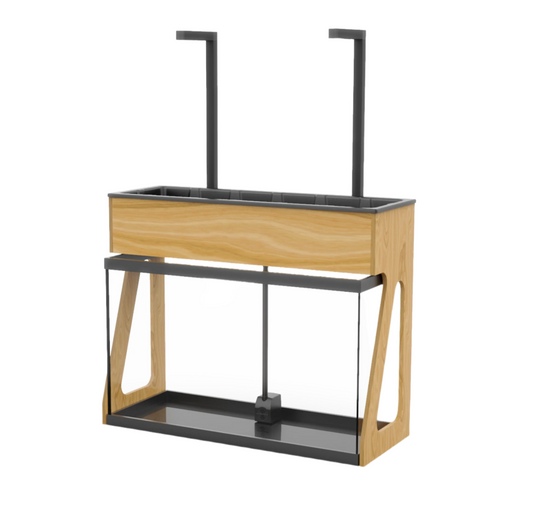
Every home, school, and community that sets up an aquaponics garden is a vote for a different future. It’s a declaration of independence from a wasteful and opaque system. It's a living laboratory and a source of fresh, healthy food. At AquaSprouts, we were founded on this very belief: that the power of aquaponics should be accessible to everyone. We designed our kits to transform any standard aquarium into a thriving, self-sustaining ecosystem, making it easy for anyone to start their journey.
The Revolution Will Be Grown
The reason aquaponics isn't mainstream isn't a failure of the technology. In fact, it's a testament to its success. It is so elegantly sustainable, so wonderfully self-contained, that it exists outside the profitable cycle of consumption that drives our current food system.
It doesn't require you to buy more and more "stuff" to keep it going. It just requires a balance of nature, a little bit of knowledge, and the desire to grow. Big Ag sells products. Aquaponics offers a process. And that fundamental difference is why its growth has been quiet, organic, and driven by passionate individuals rather than corporate marketing budgets.
The good news is that you can be a part of this quiet revolution. You can bring a living, breathing ecosystem into your home. You can teach your children where food truly comes from. You can taste the difference of a freshly picked basil leaf grown without a single chemical, fertilized by your pet fish. The revolution won't be televised; it'll be grown. In your kitchen. In your classroom. One sprout at a time.
FAQs: Your Aquaponics Questions Answered
Is aquaponics difficult to set up and maintain?
Not at all! While building a large-scale system from scratch can be complex, all-in-one kits are designed for beginners. An AquaSprouts system, for example, can be assembled in minutes and fits on a standard aquarium. Maintenance involves simple daily tasks like feeding your fish and weekly checks of water levels, which is far less work than a traditional soil garden.
Can I really grow enough food to make a difference?
Absolutely. Even a small countertop system can provide a steady supply of fresh herbs (like basil, mint, and parsley) and leafy greens (like lettuce and kale). While it won't replace all your grocery trips, it significantly reduces food waste, saves you money on expensive fresh herbs, and provides food with unparalleled freshness and nutritional value. More importantly, it makes a difference in your connection to your food.
Is an aquaponics system expensive?
There's an initial investment in the kit, but it pays for itself over time. You'll save money on groceries, especially on organic produce and fresh herbs. Plus, unlike a bag of fertilizer, the system is a one-time purchase that provides value for years through food production and as an incredible educational tool for the whole family.
What kind of plants and fish can I use in a home system?
For a desktop system, the best plants are leafy greens, herbs, and wheatgrass. Think lettuce, kale, mint, basil, oregano, and chives. For fish, hardy and low-maintenance species are ideal. A Betta (Siamese Fighting Fish) is a very popular and beautiful choice for 10-gallon tanks. Guppies and tetras also work wonderfully and are fun to watch.
Doesn't this article sound a bit like a conspiracy theory?
We understand why it might sound that way, but it's less about a "conspiracy" and more about a fundamental "conflict of interest." Businesses are designed to maximize profit, and the established agricultural industry's profit model is built on selling consumable inputs. Aquaponics, by its nature, reduces or eliminates the need for those inputs. There's simply no financial incentive for a company that sells billions in fertilizer to promote a method that doesn't require fertilizer. It's a matter of economics, not a secret plot.