Fish or Fertilizer? Decoding the Nutrient Source in Aquaponics vs. Hydroponics

So, you're captivated by the idea of growing fresh food at home without a single speck of soil. Welcome to the future of gardening! Two popular methods dominate this space: hydroponics and aquaponics. While they might look similar at first glance—plants growing in water—their fundamental difference lies in how they answer one critical question: Where do the nutrients come from?
Understanding this distinction is key to choosing the system that aligns with your goals, lifestyle, and values. One is like being a chemist, meticulously measuring and mixing solutions. The other is like being an ecologist, stewarding a living, breathing ecosystem. Let's dive in.
The Hydroponics Approach: The Chemist's Garden
In hydroponics, the gardener is in complete control. Plants are fed with a specially formulated, liquid chemical fertilizer mixed into their water reservoir. This nutrient solution contains the precise macro and micronutrients a plant needs to thrive, delivered in a form that’s immediately available to the roots.
Pros of Hydroponic Nutrients
The primary advantage of this method is precision. A grower can tailor the nutrient mix for a specific crop, like leafy greens or fruiting tomatoes, to maximize yield and growth speed. Because the nutrients are readily available, results can be incredibly fast and predictable.
Cons of Hydroponic Nutrients
However, this control comes at a cost. Hydroponics relies entirely on synthetic, man-made fertilizers. This means an ongoing expense and a dependence on manufactured products. The system also requires diligent management. You must constantly monitor and adjust pH and nutrient concentration (EC/PPM) levels. Over time, salts can build up in the system, necessitating a full water change and "flush," which can waste water and release chemical fertilizers into the environment.
The Aquaponics Approach: The Living Ecosystem
Aquaponics takes a radically different, beautifully natural approach. Instead of a bottle of chemical fertilizer, the nutrient factory is a tank of living fish. It's a closed-loop, symbiotic ecosystem that mimics the processes found in nature's ponds and rivers.
Here's how it works:
- The fish produce ammonia-rich waste.
- Beneficial bacteria, which colonize the grow media in your system, convert this toxic ammonia first into nitrites, and then into nitrates.
- These nitrates are the perfect, all-natural fertilizer for your plants.
- The plants absorb the nitrates, effectively cleaning and filtering the water for the fish.
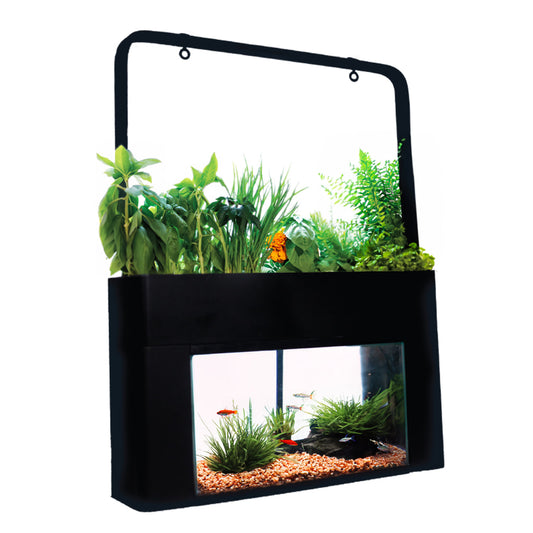
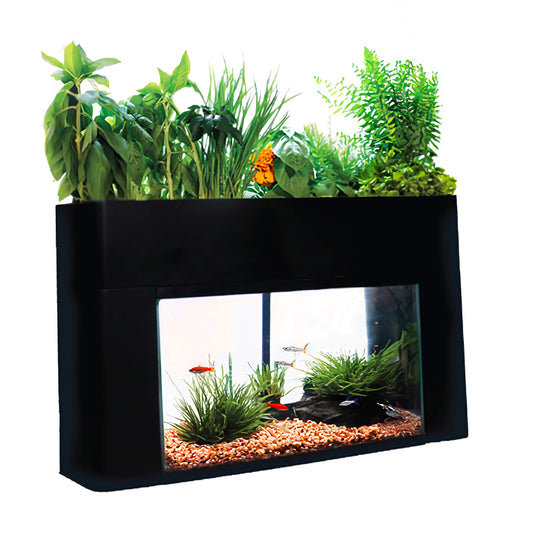
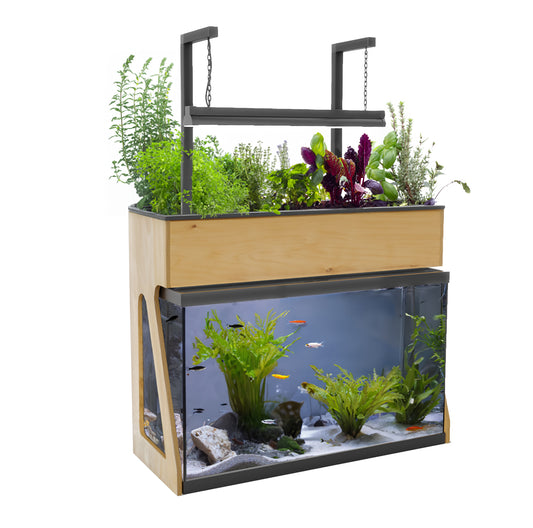
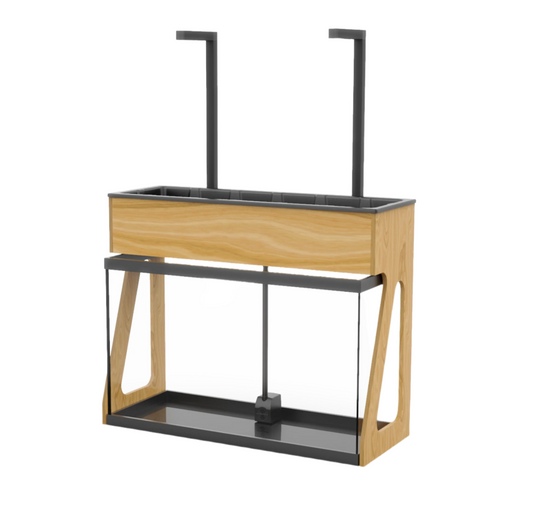
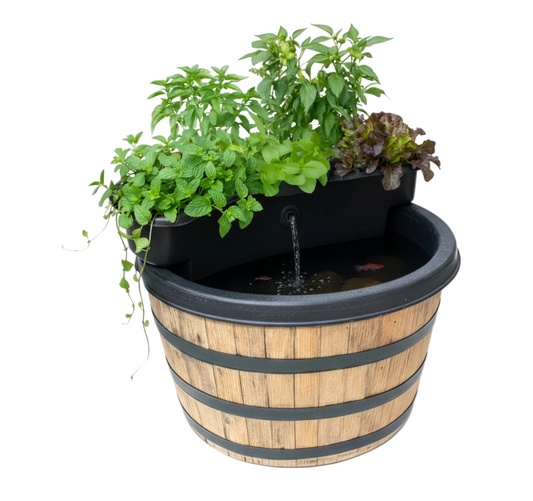
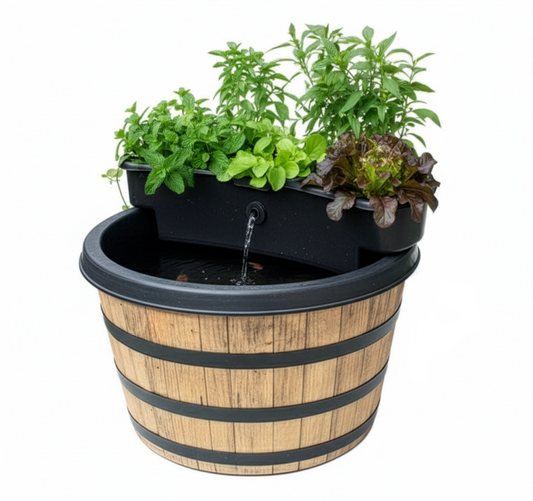
This elegant cycle means you are not just a gardener; you're the caretaker of a balanced ecosystem. Systems like the AquaSprouts Garden are designed to make this incredible process simple and accessible, turning any standard aquarium into a productive, self-cleaning aquaponics setup.
Nutrient Source Showdown: A Head-to-Head Comparison
When you place the two methods side-by-side, the contrast becomes crystal clear. The choice isn't just about growing plants—it's about the philosophy behind how you grow them.
- Sourcing & Sustainability: Hydroponics uses manufactured, often mined mineral salts. Aquaponics uses a renewable, living resource: fish waste. The only input required is fish food, which is far more sustainable than chemical fertilizers.
- Nutrient Profile: Hydroponic solutions are chemically complete but sterile. Aquaponic water is a living solution, rich with beneficial microbes and trace nutrients that promote robust, healthy plant growth in a way synthetic fertilizers often can't replicate.
- System Management: Hydroponics demands constant chemical testing, measuring, and flushing. A well-established aquaponics system is largely self-regulating. Your main tasks are simply feeding your fish and occasionally topping off evaporated water. The ecosystem does the heavy lifting.
- Organic Principles: By its very nature, aquaponics is an organic method. You cannot use pesticides or chemical additives without harming your fish. This ensures the food you grow is as pure as it gets. Hydroponics, on the other hand, is foundationally reliant on synthetic inputs.
Fish or Fertilizer: Which is Right For You?
So, should you choose fish or fertilizer? The answer depends on your vision for your garden.
If your goal is sterile, clinical control over every input for a large-scale monoculture crop, hydroponics might be your tool. You'll spend your time mixing solutions and analyzing water chemistry reports.
However, if you are drawn to a more holistic, sustainable, and natural way of growing, aquaponics is the clear winner. It’s an engaging, educational, and deeply rewarding process. You get to raise fish and grow fresh, organic produce in one self-sustaining system. It's a perfect project for a kitchen counter, a classroom, or anyone who wants to bring a piece of a living, productive ecosystem into their life.
At AquaSprouts, we believe in the power of nature's cycles. The choice between chemical fertilizers and a living ecosystem is an easy one for us. By choosing fish over fertilizer, you’re not just growing food; you’re cultivating a deeper connection to the natural world. Ready to start your own journey? Explore how the AquaSprouts Garden can bring the magic of aquaponics into your home today.